


Alcohol and Nerve Regeneration: Why Your Evening Drink is Harming Your Extremities
Discover how alcohol and nerve regeneration are blocked by evening drinks. Learn how ethanol depletes B-vitamins and harms your extremities.

Navigating daily nutrition with glucose sensitivity can often feel like a frustrating mathematical puzzle. To eliminate guesswork, following a structured diabetic food chart provides an actionable metabolic blueprint to stabilize blood sugar levels naturally. Understanding how complex carbohydrates, lean proteins, and soluble fibers interact inside your digestive tract is essential to shield your capillaries from post-meal glucose spikes. Adopting a comprehensive diabetic food chart allows you to optimize energy levels while promoting long-term glycemic recovery.
To establish a solid diagnostic foundation, read our master manual, The Ultimate Diabetes Guide 2026, and consult our main Diabetes Management Guide. Utilizing a well-planned diabetic food chart is the most reliable strategy to prevent beta-cell burnout. When you refer to a tailored diabetes chart for food, you align daily eating habits with cellular insulin sensitivity.
Integrating a diabetic food chart into your routine helps smooth out glucose fluctuations throughout the day. If you regularly experience unexplainable fatigue, cross-referencing your diet with early warning signs of diabetes ensures early detection before advanced insulin resistance develops. A properly balanced diabetic food chart protects vascular tissue by minimizing glycemic variability.
🥗 Glycemic Strategy Snapshot: How does a diabetic food chart help lower fasting glucose? By organizing meals around a low glycemic index (GI ≤ 55), a diabetic food chart slows carbohydrate breakdown, preventing sudden glucose surges and reducing long-term pancreatic strain.
Download your printable structured diabetic food chart cheat sheet to log your daily macronutrient ratios, calculate glycemic loads, and maintain steady blood sugar.
The Glycemic Index (GI) ranks carbohydrates on a scale from 0 to 100 based on how rapidly they raise post-meal blood glucose. Fast-digesting carbohydrates break down quickly into glucose molecules, triggering sharp insulin spikes. Conversely, structuring your daily meal schedule around a low-GI diabetic food chart ensures that carbohydrates convert into cellular energy at a controlled pace.
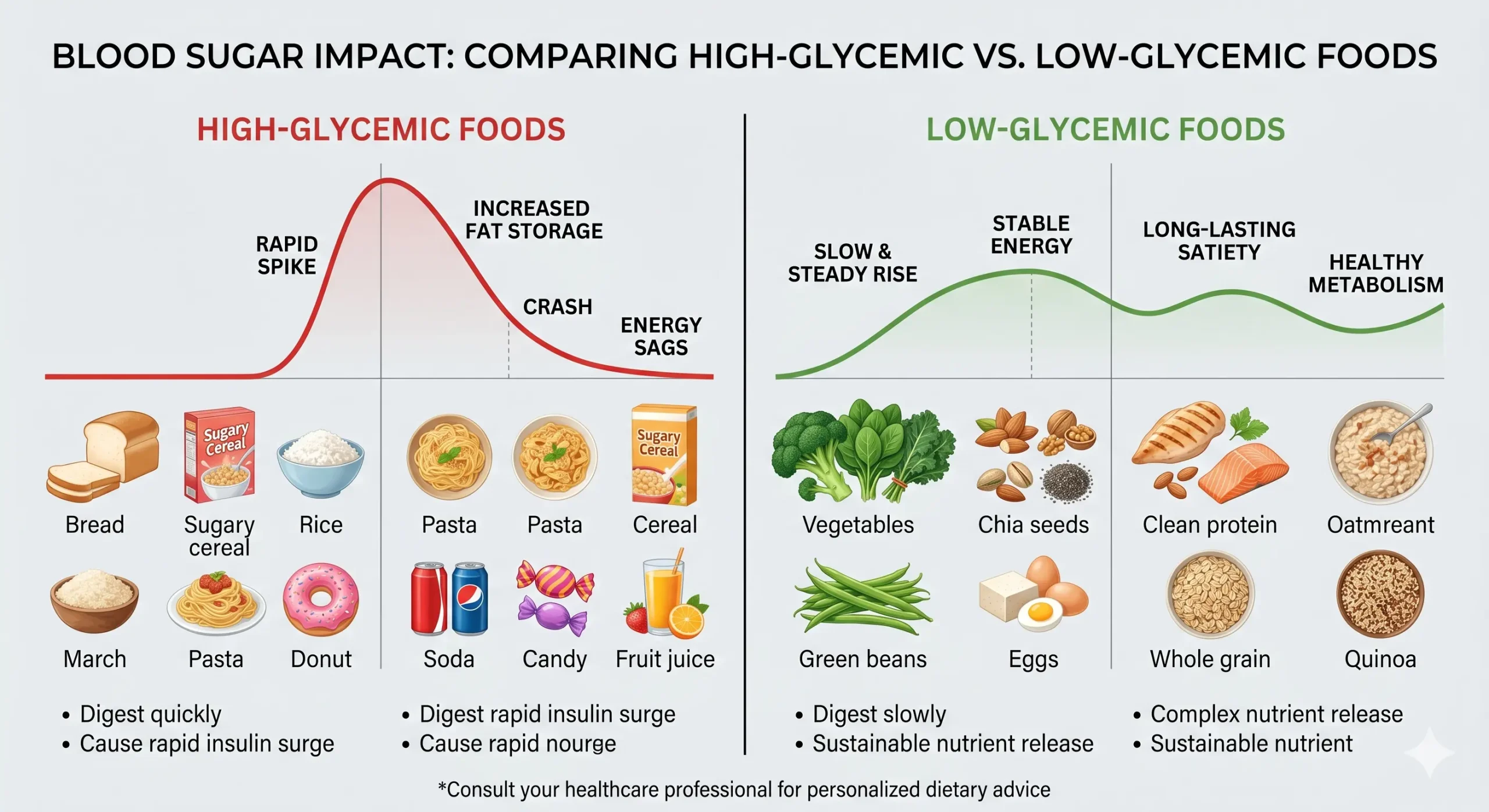
When selecting ingredients for a diabetic food chart, prioritize non-starchy vegetables and legumes with a GI score of 55 or lower. These slow-release options contain high concentrations of soluble fiber, which forms a gel-like layer in the digestive tract to slow glucose absorption. Incorporating ingredients featured in our guide on low glycemic index fruits for diabetic daily diet helps satisfy sweet cravings while keeping postprandial levels steady.
A well-curated diabetic food chart acts as a buffer against glycemic volatility. By pairing low-GI carbs with lean protein and healthy fats, a diabetic food chart reduces the metabolic burden placed on pancreatic beta cells after every meal.
Avoiding hidden dietary traps is just as important as choosing nutrient-dense foods. Maintaining an accurate high sugar foods chart helps eliminate items that provoke sudden glycemic spikes and elevate systemic inflammation.
Refined starches, sweetened drinks, and processed snacks rapidly elevate blood sugar, requiring large insulin surges to clear glucose from circulation. Consult the high sugar foods chart below to identify items that should be minimized or removed from your daily routine:
Cross-referencing your weekly grocery list with a high sugar foods chart protects your metabolism from unnecessary glycemic stress. Replacing high-GI starches with nutrient-dense options ensures your diabetic food chart supports lasting metabolic health.
A successful diet for managing diabetes balances lean protein, dietary fiber, and healthy monounsaturated fats. Utilizing a comprehensive diabetic food chart reduces daily decision fatigue and promotes consistent glycemic stability. Below is a macro-balanced weekly schedule designed as a functional glucose food chart reference:
| Day | Breakfast (GI ≤ 55) | Lunch (Balanced Macros) | Dinner (High Fiber / Protein) | Snacks (Low Glycemic) |
|---|---|---|---|---|
| Monday | Steel-cut oats with chia seeds | Grilled chicken salad with olive oil | Baked salmon with steamed broccoli | Handful of raw almonds |
| Tuesday | Two poached eggs with avocado | Quinoa bowl with mixed greens & tofu | Grilled turkey breast with spinach | Celery sticks with peanut butter |
| Wednesday | Low-fat Greek yogurt with berries | Tuna salad wrapped in lettuce | Baked cod with roasted asparagus | Portion of walnuts |
| Thursday | Chia seed pudding with almonds | Chickpea salad with cucumber & feta | Sirloin steak with sautéed kale | One medium green apple |
| Friday | Omelet with spinach & mushrooms | Lentil soup with side green salad | Baked chicken with cauliflower rice | Pumpkin seeds (30g) |
| Saturday | Protein shake with flaxseeds | Sardines on low-GI rye toast | Grilled shrimp with zucchini noodles | Mixed berries with raw pecans |
| Sunday | Avocado toast on sourdough | Grilled chicken with Brussels sprouts | Baked trout with green beans | Cucumber slices with hummus |

Following this weekly glucose food chart ensures an optimal mix of macronutrients while keeping daily carbohydrates within target thresholds. Adjusting portion sizes within your diabetic food chart helps support overall health goals without compromising glycemic stability.
Use our interactive clinical tool below to calculate net carbohydrates and estimate your meal's glycemic impact based on your customized diabetic food chart plan:
Enter your meal's total carbohydrate and dietary fiber content to evaluate net carbs and glycemic spike risk.
Explore our full collection of dietary guides, meal plans, and glycemic control protocols to customize your nutrition strategy:
Glycemic control involves managing blood sugar around the clock, not just during daytime hours. Many individuals struggle with overnight blood sugar crashes or elevated morning readings caused by early dawn hormonal shifts.
Incorporating nutrient-dense choices from our guide on best evening snacks to prevent nighttime hypoglycemia helps keep overnight glucose levels stable. A small pre-bedtime snack combining complex carbohydrates with healthy fat or protein—such as raw almonds with a few blueberry berries—prevents nocturnal glucose dips that can trigger compensatory adrenaline release.
Starting your morning with hydration also supports steady blood sugar levels. Incorporating recipes from our guide on best morning drinks for lower blood sugar helps improve early morning insulin sensitivity. Aligning evening snacks and morning beverages within a diabetic food chart creates reliable 24-hour glycemic control.
A common oversight in metabolic care is focusing solely on fasting blood sugar while ignoring fasting insulin levels. While HbA1c reflects a 90-day glucose average, fasting insulin shows how hard your pancreas is working to maintain those levels. Consistently following a low-GI diabetic food chart reduces pancreatic strain and supports long-term insulin sensitivity.
Adopting a structured, low-glycemic eating pattern plays a direct role in improving early-stage metabolic health. Review our step-by-step blueprint on how to reverse type 2 diabetes to learn how carbohydrate control, weight management, and movement work together. Expecting mothers can also tailor their daily meal choices using our dedicated gestational diabetes diet plan.
If you practice timed eating windows, consult our reference on intermittent fasting for type 2 diabetes safety guide to safely align fasting periods with your diabetic food chart.
While an optimized diabetic food chart forms your nutritional core, adding targeted adaptogens and minerals can support carbohydrate metabolism. Incorporating science-backed natural formulas helps support healthy cellular glucose uptake.
Essential minerals like chromium support insulin receptor function. Adaptogenic botanicals like Eleuthero for Diabetes Fatigue help maintain daily stamina, while Coleus Forskohlii Blood Sugar regulators and Maca Root Energy Blood Sugar blends support overall metabolic balance alongside a structured diet.

Along with your daily diabetic food chart, adding clean botanicals helps keep glucose stable. Check out our review for the best supplement for blood sugar (Sugar Defender), or explore our best blood sugar support supplement (GlucoTonic) guide.
*Always backed by an ironclad, risk-free 60-day money-back guarantee directly from the official manufacturer.
Clear, direct answers regarding daily food charts, glycemic management, and high sugar foods to avoid.
Low-glycemic index fruits like blueberries, strawberries, raspberries, and tart cherries can be safely included in moderate portions within a diabetic food chart to prevent sudden blood sugar spikes.
A diabetes chart for food organizes meals around slow-digesting carbohydrates, lean proteins, and soluble fiber, which prevents sharp glycemic spikes and reduces morning fasting glucose elevated by the Dawn Phenomenon.
While white rice is a high-glycemic starch, a structured diabetic food chart replaces it with complex, fiber-dense grains such as wild quinoa, black rice, or cauliflower rice for steady digestion.
A high sugar foods chart highlights refined flour products, sugar-sweetened beverages, canned fruits in syrup, ultra-processed snack chips, and high-fructose condiments as primary drivers of insulin resistance.
Yes. A blood sugar food chart prioritizes low-GI whole foods, preventing excessive pancreatic insulin secretion, lowering cellular oxidative strain, and systematically reducing HbA1c levels over a 90-day cycle.
To balance daily carbs using a glucose food chart, distribute complex carbohydrates evenly across 3 main meals (typically 30 to 45 grams per meal) paired with healthy fats and protein to flatten postprandial glucose curves.
Managing your daily nutrition does not have to be confusing or overly restrictive. Following a structured diabetic food chart allows you to enjoy satisfying, nutrient-dense meals while maintaining healthy blood sugar levels. Staying consistent with your meal plan, monitoring key metabolic markers, and working with your healthcare team helps protect long-term metabolic health. Reviewing your meal habits alongside a trusted blood sugar food chart keeps your health goals on track.
Get instant access to your printable diabetic food chart weekly blueprint for steady blood sugar and long-term glycemic defense.
To explore our complete library of metabolic guides, tracking charts, and blood sugar support reviews, visit our primary Diabetes Resource Hub or check our master guide The Ultimate Diabetes Guide 2026.
Discover how alcohol and nerve regeneration are blocked by evening drinks. Learn how ethanol depletes B-vitamins and harms your extremities.

Explore how excessive dietary sodium and processed foods impair vascular microcirculation, increasing nerve pain and extremity numbness.

Discover how artificial sweeteners worsen neuropathy and why energy drinks disrupt nerve signal transmission. Protect your extremity health today.