


Alcohol and Nerve Regeneration: Why Your Evening Drink is Harming Your Extremities
Discover how alcohol and nerve regeneration are blocked by evening drinks. Learn how ethanol depletes B-vitamins and harms your extremities.
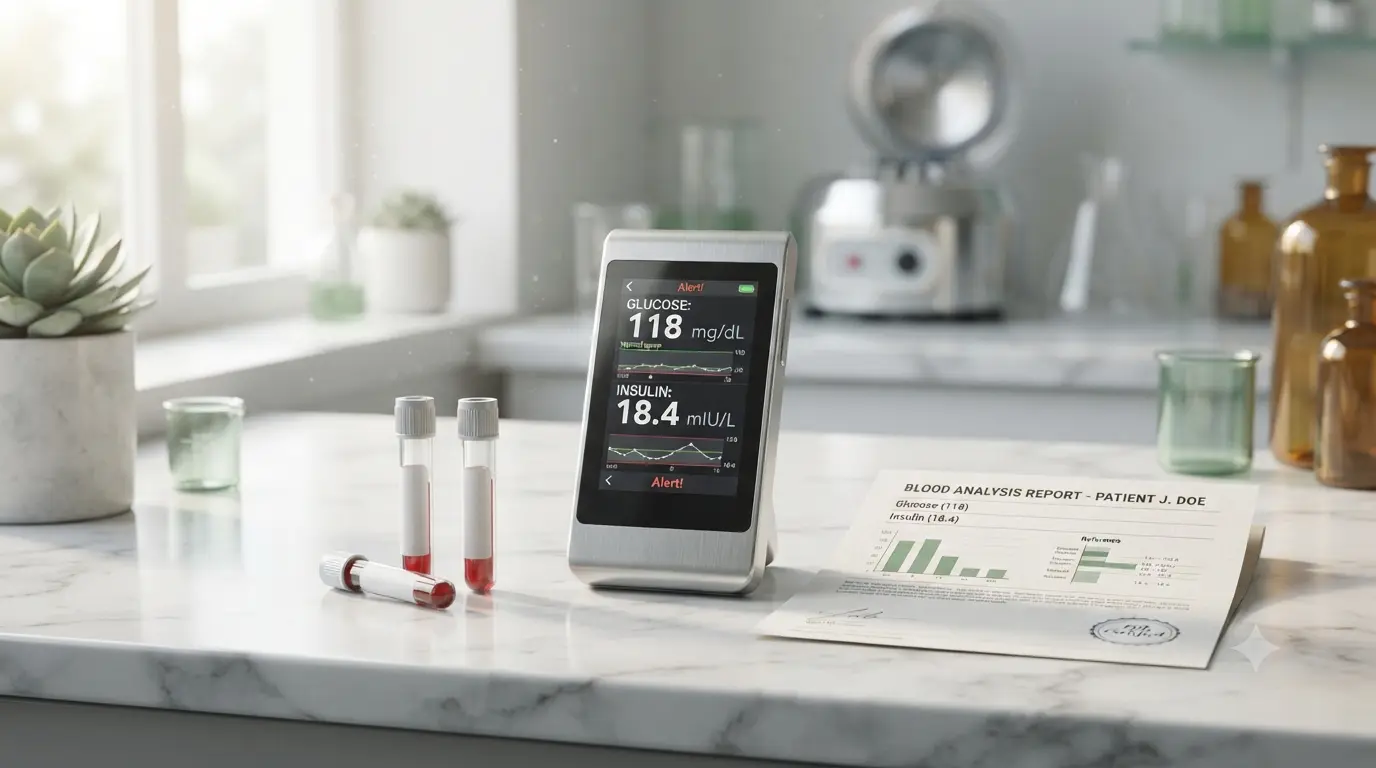
When evaluating early endocrine dysfunction, patients and practitioners often ask: is fasting insulin the same as a1c? The short biological answer is an absolute no. While both biomarkers serve as critical cornerstones in clinical metabolic screening, they measure entirely different physiological mechanisms inside your bloodstream. Asking is fasting insulin the same as a1c highlights a fundamental distinction: fasting insulin evaluates the real-time hormone volume secreted by pancreatic beta cells to clear glucose, whereas HbA1c calculates the percentage of hemoglobin proteins bound by circulating sugar over a 90-day window.
Failing to distinguish whether is fasting insulin the same as a1c can lead to years of unrecognized insulin resistance. Many clinicians clarify whether is fasting insulin the same as a1c during annual checkups because relying solely on A1C can obscure pancreatic strain. To establish a complete metabolic foundation, review our overarching Diabetes Management Guide, master our flagship strategy in The Ultimate Diabetes Guide 2026, and check our category master protocol on A1C test fasting required rules.
🔍 Endocrine Diagnostic Snapshot: Is fasting insulin the same as a1c in standard blood work? No! Fasting insulin reflects real-time pancreatic stress and can detect insulin resistance up to 10–15 years before HbA1c rises. Evaluating whether is fasting insulin the same as a1c is essential because an HbA1c test tracks rolling 3-month average sugar levels, frequently missing early hyperinsulinemia when pancreatic beta cells are compensating.
Download your printable PDF tracker to record fasting insulin levels, calculate your HOMA-IR score, determine whether is fasting insulin the same as a1c for your lab panel, and review step-by-step a1c test preparation rules.
Enter your Fasting Insulin and Fasting Blood Glucose numbers to calculate your HOMA-IR score and determine: is fasting insulin the same as a1c for your clinical laboratory risks.
To evaluate why is fasting insulin the same as a1c a misconception, we must analyze their distinct physiological pathways. Insulin is a polypeptide hormone synthesized by pancreatic beta cells. When you consume dietary carbohydrates, glucose enters the circulation, triggering insulin release. Insulin functions as a biochemical key, binding to cell surface receptors to shuttle glucose into skeletal muscle, hepatic tissue, and adipocytes for ATP cellular energy production.
Conversely, Hemoglobin A1C is not a hormone. It measures non-enzymatic glycation—the percentage of red blood cell hemoglobin molecules bonded with glucose over their 120-day lifecycle. Asking is fasting insulin the same as a1c helps patients realize that HbA1c tracks passive sugar accumulation, while fasting insulin measures the active endocrine force required to maintain glucose equilibrium. Understanding whether is fasting insulin the same as a1c clarifies why one measures hormone production while the other tracks protein sugar coating.
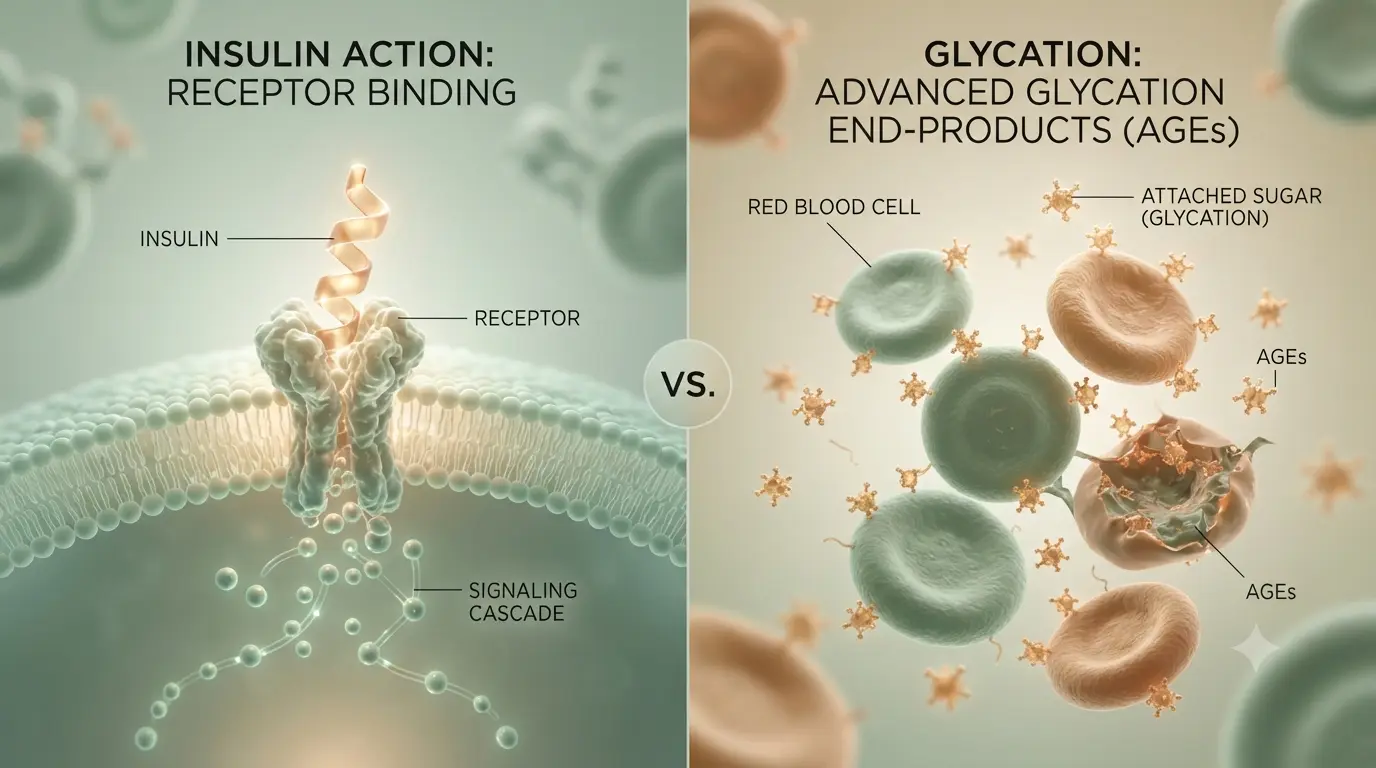
When cellular insulin resistance develops, cell receptors become desensitized. To prevent toxic blood sugar surges, the pancreas compensates by secreting 2x to 5x more insulin. During this early compensatory phase, your HbA1c remains completely normal because hyperinsulinemia successfully clears circulating glucose. Consequently, anyone wondering is fasting insulin the same as a1c must recognize that an HbA1c test alone can provide a false sense of security while hidden metabolic stress progresses. Recognizing that is fasting insulin the same as a1c is a false equivalence allows individuals to test fasting insulin much earlier.
Understanding the diagnostic interplay between fasting blood sugar vs a1c and fasting insulin is vital when reviewing lab results. Patients evaluating whether is fasting insulin the same as a1c must examine how baseline glucose and hormone output interact. The clinical comparison matrix below outlines their biological targets, diagnostic timeframes, and optimal functional medicine ranges:
| Diagnostic Metric | Fasting Insulin Test | Hemoglobin A1C (HbA1c) | Fasting Plasma Glucose |
|---|---|---|---|
| Biological Measurement | Circulating pancreatic hormone concentration | Glycated hemoglobin percentage in red blood cells | Real-time baseline fasting blood sugar concentration |
| Captured Timeframe | Real-time acute fasting state (8–12 hours) | Rolling 3-month (90–120 day) glucose average | Single morning baseline snapshot |
| Early Prediabetes Detection | Detects resistance 10–15 years earlier | Detects changes only after beta-cell fatigue occurs | Flags acute morning glucose surges |
| Standard Lab Reference | 2.0 – 19.0 uIU/mL | Under 5.7% (Normal) | 70 – 99 mg/dL |
| Optimal Functional Target | 2.0 – 6.0 uIU/mL | 4.8% – 5.4% | 75 – 86 mg/dL |
This side-by-side comparison underscores why evaluating fasting blood sugar vs a1c alongside fasting insulin provides a far more complete metabolic picture than relying on a single biomarker alone. It also demonstrates why is fasting insulin the same as a1c remains a fundamental diagnostic question for modern health profiling.
A major point of clinical confusion involves proper a1c test preparation. Patients frequently ask: should you fast before a hemoglobin a1c test, or do you need to fast for an a1c draw?
Because an HbA1c assay measures 90-day glycated hemoglobin, eating a meal immediately prior to your appointment will not alter your 3-month average. Therefore, for a standalone A1C test, an overnight fast is not required. However, if your doctor orders a comprehensive metabolic panel that includes fasting insulin or fasting plasma glucose, an 8 to 12-hour fast is strictly mandatory. Knowing whether is fasting insulin the same as a1c helps you understand why fasting protocols differ between combined panels and standalone A1C tests.
For complete laboratory preparation instructions, read our primary sub-pillar guide on A1C test fasting required rules. To understand how baseline glucose markers align with long-term glycation, explore normal fasting blood sugar levels vs A1C.
When analyzing lab sheets, patients often confuse the difference between average blood glucose and fasting blood sugar. Fasting blood sugar represents an acute, single-moment snapshot of circulating glucose taken after an overnight fast. In contrast, Estimated Average Glucose (eAG) is a calculated metric derived directly from your HbA1c percentage, representing your estimated 24/7 blood sugar level over the preceding 3 months.
Understanding the difference between average blood glucose and fasting blood sugar prevents misinterpreting isolated glucose spikes. Furthermore, evaluating is fasting insulin the same as a1c helps explain why a person might have normal average blood glucose while experiencing elevated fasting insulin. For example, a high fasting glucose reading caused by morning cortisol does not necessarily mean your 90-day eAG average is elevated. To calculate your exact eAG values from your lab sheet, consult our detailed guide on estimated average glucose eAG vs A1C conversion.
A common diagnostic dilemma is discovering high fasting glucose but normal a1c readings. How can morning fasting sugar be elevated while 3-month glycated hemoglobin remains within a healthy range?
Understanding why is fasting insulin the same as a1c a false assumption helps patients catch early dawn phenomenon and insulin resistance. Several physiological mechanisms explain high fasting glucose but normal a1c results:
To examine why morning glucose readings deviate from 90-day averages, read our dedicated breakdown on why fasting blood sugar is higher than A1C.
While fasting markers provide baseline data, assessing 2 hours post prandial blood sugar reveals how efficiently your body processes dietary carbohydrates. The term "post prandial" refers to the period immediately following a meal. Assessing post-meal glucose alongside whether is fasting insulin the same as a1c provides a complete diagnostic assessment of insulin secretion kinetics.
In a healthy endocrine system, 2 hours post prandial blood sugar should return to below 140 mg/dL (7.8 mmol/L). If post-meal sugar remains elevated or drops precipitously, it points to underlying insulin receptor desensitization or delayed insulin phase secretion.
To evaluate post-meal glucose ranges, check our comprehensive guide on normal 2 hour postprandial blood sugar range. For insights into direct pancreatic secretion markers, explore the C-peptide test for diabetes insulin production. If you experience sudden post-meal shakiness or crashes, review postprandial reactive hypoglycemia symptoms and causes.
Explore our essential clinical guides below to better understand your blood test results, baseline metrics, and lab preparation rules:
If your lab tests reveal elevated fasting insulin—even while your HbA1c remains normal—taking proactive measures to restore cellular insulin receptor sensitivity is essential. Realizing that is fasting insulin the same as a1c an invalid comparison helps you choose targeted dietary interventions and science-backed natural formulas to lower fasting insulin levels naturally.

Key botanical extracts play a supporting role in metabolic care. Adaptogens like Eleuthero for Diabetes Fatigue help combat stress-induced glucose surges, while Maca Root Energy Blood Sugar elements support adrenal balance. Additionally, combining targeted botanicals like Coleus Forskohlii Blood Sugar regulators promotes healthy cellular energy utilization.

If you are evaluating whether is fasting insulin the same as a1c and want to support both real-time hormone response and 3-month glycemic stability, adding clean botanical formulas can be valuable. Read our clinical review of the best supplement for blood sugar (Sugar Defender) or explore our breakdown of the best blood sugar support supplement (GlucoTonic).
*Always backed by an ironclad 60-day money-back guarantee directly from the official manufacturer.
Clear, direct answers regarding whether is fasting insulin the same as a1c, pre-test fasting rules, and metabolic diagnostic differences.
No, is fasting insulin the same as a1c is a common diagnostic misconception, but they are entirely different tests. Fasting insulin measures active pancreatic hormone levels after an 8-12 hour fast, whereas HbA1c measures the 3-month average percentage of glycated red blood cells.
If an A1C test is performed in isolation, fasting is optional. However, if your requisition includes a combined panel with fasting insulin or fasting plasma glucose, an 8 to 12-hour fast is strictly required for accurate results.
Fasting blood sugar measures your exact blood glucose concentration at a single baseline morning moment after fasting. Average blood glucose (eAG) is a calculated average representing your 24/7 circulating glucose over 90 days derived from your HbA1c. This core diagnostic difference is why asking is fasting insulin the same as a1c is essential for accurate lab interpretation.
High fasting glucose with a normal A1C is frequently caused by the dawn phenomenon, acute pre-test stress cortisol surges, poor sleep quality, or early hepatic insulin resistance where daytime post-meal glucose remains well controlled.
For a standalone HbA1c test, fasting is unnecessary. However, 2 hours post prandial blood sugar testing requires specific post-meal timing guidelines to evaluate how rapidly your body clears dietary glucose spikes. Understanding whether is fasting insulin the same as a1c helps clarify how post-meal insulin response differs from 90-day glycation.
Recognizing that is fasting insulin the same as a1c is a dangerous misconception empowers you to take control of your endocrine health. Do not rely solely on a normal HbA1c reading. Understanding whether is fasting insulin the same as a1c allows you to request a fasting insulin test alongside your routine panels, monitor your 3-month glycation trends, and adopt a nutrient-dense lifestyle to preserve long-term metabolic health.
Get instant access to your printable meal planning blueprint designed to improve insulin sensitivity and support steady blood sugar levels. Access your structured diabetic food chart today.
To explore our complete library of diagnostic guides, tracking charts, and blood sugar support reviews, visit our primary Health Hub Diabetes Management Guide.
Discover how alcohol and nerve regeneration are blocked by evening drinks. Learn how ethanol depletes B-vitamins and harms your extremities.

Explore how excessive dietary sodium and processed foods impair vascular microcirculation, increasing nerve pain and extremity numbness.

Discover how artificial sweeteners worsen neuropathy and why energy drinks disrupt nerve signal transmission. Protect your extremity health today.

Explore how artificial trans fats and hydrogenated processed oils degrade structural myelin membranes, starving nerve cells of proper electrical insulation.

Discover how smoking and nicotine constrict nerve blood supply through microvascular damage. Learn how tobacco worsens neuropathy symptoms.

Uncover the common daily foods that silently damage your nervous system, trigger blood sugar spikes, and worsen neuropathy symptoms.