


Alcohol and Nerve Regeneration: Why Your Evening Drink is Harming Your Extremities
Discover how alcohol and nerve regeneration are blocked by evening drinks. Learn how ethanol depletes B-vitamins and harms your extremities.
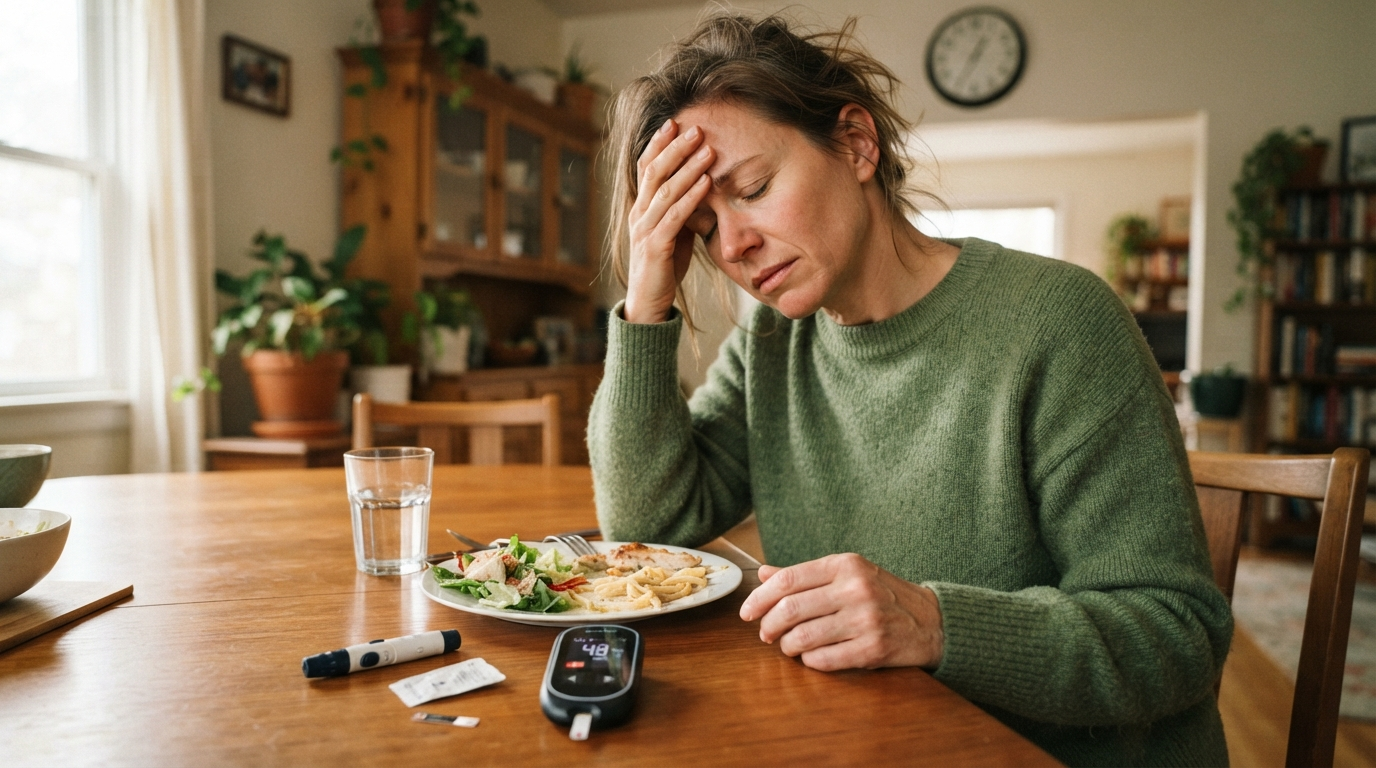
Experiencing sudden cold sweats, hand tremors, severe brain fog, and intense anxiety precisely 3 to 5 hours after eating a meal can be a disorienting physiological event. Investigating a postprandial reactive hypoglycemia symptoms cause requires understanding how delayed pancreatic insulin secretion triggers rapid post-meal sugar crashes. Integrating post-meal tracking with our foundational Health Hub Diabetes Management Guide provides clarity when managing erratic post-meal sugar drops.
While standard medical evaluations focus on fasting blood sugar, analyzing a postprandial reactive hypoglycemia symptoms cause reveals early stage hyperinsulinemic responses due to peripheral insulin resistance. Uncovering the biological drivers behind a postprandial reactive hypoglycemia symptoms cause allows individuals to stop post-meal fatigue before it occurs. Identifying this specific postprandial reactive hypoglycemia symptoms cause helps prevent long-term metabolic strain on pancreatic beta cells.
Whether you are exploring strategies on how to reverse type 2 diabetes or troubleshooting non-diabetic glucose crashes, mastering a postprandial reactive hypoglycemia symptoms cause empowers long-term metabolic health. Understanding each postprandial reactive hypoglycemia symptoms cause ensures tailored dietary interventions.
🔍 Clinical Diagnostic Snapshot: Comparing post-meal glucose crashes against fasting numbers clarifies the fasting blood sugar vs a1c dynamic. Understanding the difference between average blood glucose and fasting blood sugar ensures you interpret transient postprandial dips in proper physiological context.
Get instant access to your printable weekly meal planning blueprint designed to eliminate postprandial sugar crashes. Access your structured diabetic food chart today.
Select how many hours after eating your symptoms occur to evaluate the underlying physiological mechanism of your postprandial reactive hypoglycemia symptoms cause.
To understand a postprandial reactive hypoglycemia symptoms cause, we must trace how the pancreas responds to carbohydrate intake. In healthy physiology, eating carbohydrates triggers immediate first-phase insulin release, preventing sharp blood sugar spikes.
However, in early insulin resistance, first-phase insulin response is delayed. Glucose rises rapidly, prompting pancreatic beta cells to overcompensate by dumping massive second-phase insulin surges into circulation. By the 3 to 5 hour mark, digested food has cleared the stomach, but excess insulin remains in circulation, driving blood glucose below normal baseline levels in a classic postprandial reactive hypoglycemia symptoms cause mechanism.
This exaggerated insulin response is a primary postprandial reactive hypoglycemia symptoms cause. Identifying subtle metabolic shifts alongside early warning signs of diabetes prevents unexpected post-meal drops.
Keeping post-meal glucose within safe ranges—as outlined in our 2 hours post prandial blood sugar guide—protects against reactive crashes, while ordering a C-peptide test for diabetes insulin production verifies whether your pancreas is overproducing insulin in response to a postprandial reactive hypoglycemia symptoms cause.
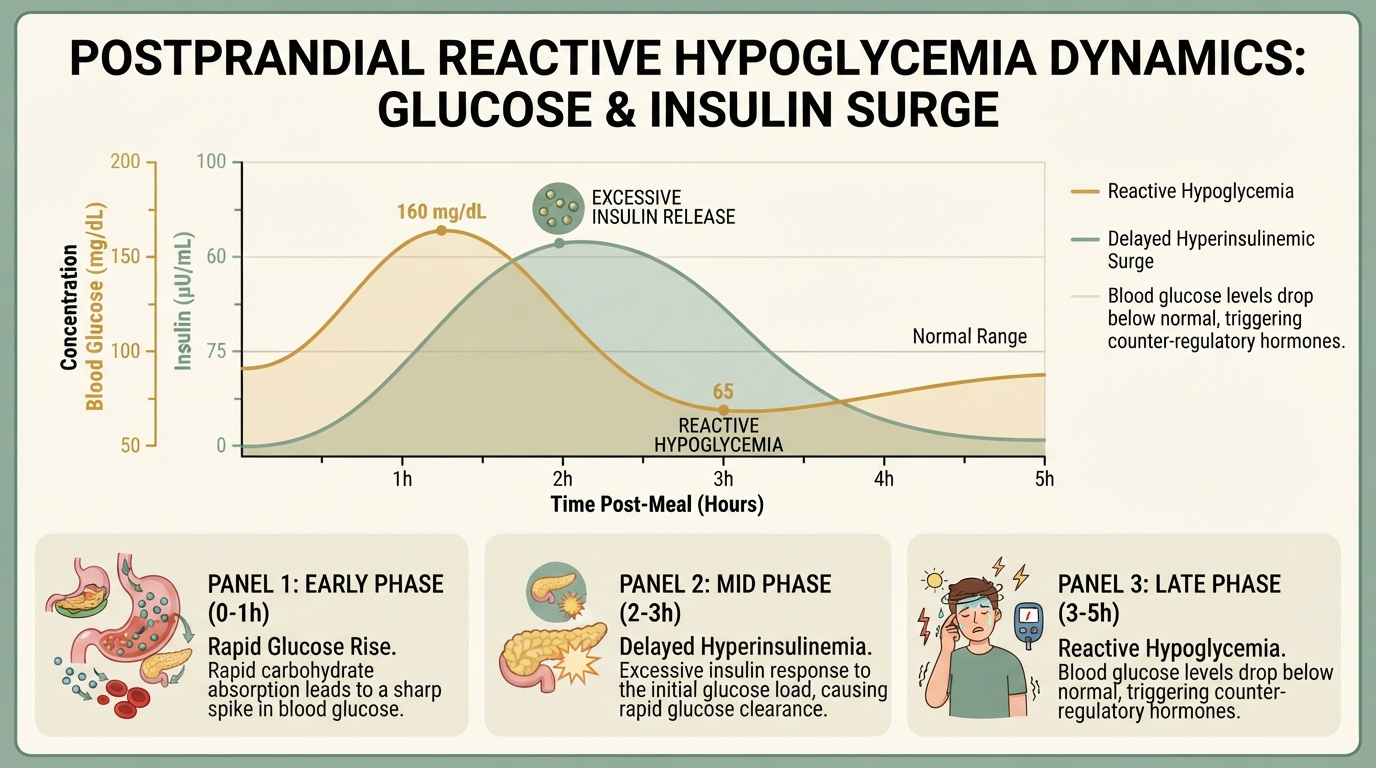
A key aspect of recognizing a postprandial reactive hypoglycemia symptoms cause involves distinguishing between autonomic adrenal warning signs and central neuroglycopenic symptoms:
Comparing post-meal patterns with morning baselines in normal fasting blood sugar levels vs A1C provides diagnostic context for analyzing a postprandial reactive hypoglycemia symptoms cause. Patients with high fasting glucose but normal a1c often exhibit postprandial glycemic volatility before fasting numbers permanently elevate.
Understanding why morning readings differ—detailed in why fasting blood sugar is higher than A1C—helps distinguish morning Dawn surges from daytime reactive drops, while evaluating whether is fasting insulin the same as A1C clarifies underlying hyperinsulinemic risks associated with a postprandial reactive hypoglycemia symptoms cause.
The table below compares key diagnostic parameters to help distinguish a postprandial reactive hypoglycemia symptoms cause from structural fasting low blood sugar states:
| Diagnostic Parameter | Postprandial Reactive Hypoglycemia | Fasting Hypoglycemia | Alimentary Hypoglycemia (Post-Surgical) |
|---|---|---|---|
| Timing of Glucose Drop | 3 to 5 Hours After Meals | 8+ Hours Fasting or Overnight | 1 to 2 Hours After Eating |
| Primary Root Cause | Delayed Hyperinsulinemia (Postprandial Reactive Hypoglycemia Symptoms Cause) | Insulinoma, Medication Overdose, Liver Disease | Rapid Gastric Emptying / Dumping Syndrome |
| Typical Nadir Glucose Level | 50 to 68 mg/dL (Transient Drop) | < 50 mg/dL (Progressive & Severe) | 40 to 60 mg/dL (Abrupt Crash) |
| Autonomic Warning Signs | Shakiness, Sweating, Anxiety, Tremors | Severe Adrenal Alarm, Cold Clammy Skin | Profuse Sweating, Flushing, Tachycardia |
| Primary Dietary Solution | Pair Protein/Fat with Fiber, Avoid Simple Carbs | Clinical Medical Assessment & Treatment | Small Frequent Soluble-Fiber Meals |
Addressing a postprandial reactive hypoglycemia symptoms cause requires structured dietary adjustments. Relying on simple sugars to treat every crash can recreate the spike-and-crash cycle by triggering secondary insulin surges in a recurring postprandial reactive hypoglycemia symptoms cause loop.
Structuring daily meals around a structured diabetic food chart ensures complex fiber, healthy fats, and lean proteins buffer carbohydrate absorption. Reviewing lab prep protocols such as our a1c test preparation guide guarantees proper testing standards when evaluating post-meal metabolic responses.
Calculating an estimated average glucose eAG vs A1C conversion translates lab percentages into familiar mg/dL values when assessing a postprandial reactive hypoglycemia symptoms cause.
Explore our essential clinical guides below to better understand your blood test results, baseline metrics, and lab preparation rules:
Combining dietary strategies for a postprandial reactive hypoglycemia symptoms cause with targeted botanical adaptogens supports steady metabolic function. Incorporating adaptogens such as Eleuthero for Diabetes Fatigue, Coleus Forskohlii Blood Sugar regulators, and Maca Root Energy Blood Sugar balance supports stamina without overstimulating pancreatic insulin output.
Expecting mothers managing glycemic volatility can review a gestational diabetes diet plan for safe nutritional guidelines.

When managing a postprandial reactive hypoglycemia symptoms cause, adding science-backed natural formulas like the best supplement for blood sugar (Sugar Defender) or evaluating the best blood sugar support supplement (GlucoTonic) helps flatten post-meal glycemic surges and reduce late hyperinsulinemic crashes.
*Always backed by a 60-day money-back guarantee directly from the official manufacturer.
Answers to common questions regarding a postprandial reactive hypoglycemia symptoms cause, lab prep rules, and post-meal glucose management.
Postprandial glucose drops 3 to 5 hours after eating are primarily caused by delayed, exaggerated insulin release in a classic postprandial reactive hypoglycemia symptoms cause. Early insulin resistance causes pancreatic beta-cells to overcompensate by pumping excess late-phase insulin, driving blood glucose below baseline.
Yes. A postprandial reactive hypoglycemia symptoms cause frequently serves as an early clinical marker of insulin resistance. Delayed first-phase insulin secretion forces the pancreas to secrete hyperinsulinemic second-phase surges, causing post-meal sugar crashes years before fasting glucose elevates.
When patients ask should you fast before a hemoglobin a1c test, standalone A1C tests do not strictly require fasting. However, following standard a1c test preparation rules is necessary if your doctor orders a comprehensive metabolic panel.
When evaluating do you need to fast for an a1c test, food intake immediately before testing does not alter glycated red blood cells. However, for evaluating fasting glucose, an 8 to 12 hour fast is required.
Autonomic symptoms (sweating, tremors, rapid heart rate, anxiety) are triggered by adrenaline release as warning signals during a postprandial reactive hypoglycemia symptoms cause event. Neuroglycopenic symptoms (brain fog, dizziness, confusion, irritability) occur when the brain is deprived of glucose.
For mild crashes resulting from a postprandial reactive hypoglycemia symptoms cause, eat 10 to 15 grams of fast-acting carbohydrates paired with a small complex protein source to prevent secondary rebound insulin spikes.
Understanding a postprandial reactive hypoglycemia symptoms cause empowers you to take control of post-meal glucose swings. Differentiating delayed hyperinsulinemic surges from structural fasting drops allows you to adopt targeted dietary strategies that protect your energy and brain clarity. Resolving each postprandial reactive hypoglycemia symptoms cause restores confidence in your daily nutrition.
Get instant access to your printable meal planning blueprint designed to eliminate the root drivers of a postprandial reactive hypoglycemia symptoms cause. Access your structured diabetic food chart today.
To explore our complete library of diagnostic guides, tracking tools, and blood sugar support reviews, visit our primary Health Hub Diabetes Management Guide or our master reference in The Ultimate Diabetes Guide 2026.
Discover how alcohol and nerve regeneration are blocked by evening drinks. Learn how ethanol depletes B-vitamins and harms your extremities.

Explore how excessive dietary sodium and processed foods impair vascular microcirculation, increasing nerve pain and extremity numbness.

Discover how artificial sweeteners worsen neuropathy and why energy drinks disrupt nerve signal transmission. Protect your extremity health today.

Explore how artificial trans fats and hydrogenated processed oils degrade structural myelin membranes, starving nerve cells of proper electrical insulation.

Discover how smoking and nicotine constrict nerve blood supply through microvascular damage. Learn how tobacco worsens neuropathy symptoms.

Uncover the common daily foods that silently damage your nervous system, trigger blood sugar spikes, and worsen neuropathy symptoms.